
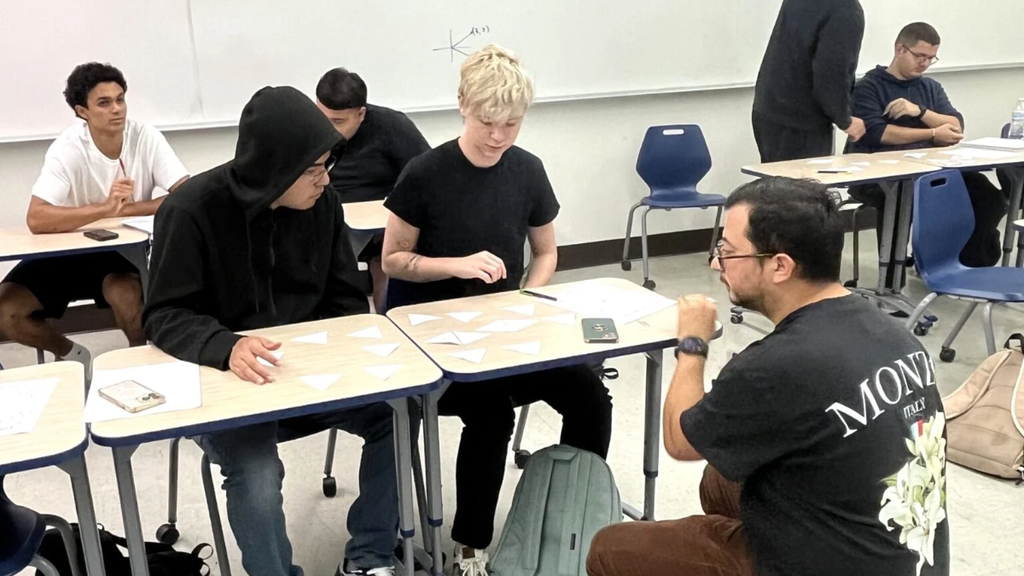
STEM students at California’s community colleges will still be able to take precalculus and other prep math classes next school year. The state chancellor’s office has pushed back the deadline for colleges to show that these courses actually help students pass calculus. The new deadline is July 2028, one year later than planned.
Why Precalculus Was on the Chopping Block
In 2022, California passed Assembly Bill 1705. The law says community colleges should place STEM students straight into calculus as their first math class. A prep course is allowed only if a student is “highly unlikely to succeed” without it.
The idea is simple. Long chains of math classes often slow students down or make them drop out. Skipping them should help students finish their associate degrees and transfer sooner.
How Colleges Have Kept Prep Classes Alive
The chancellor’s office has allowed colleges to keep offering prep classes to some STEM students who didn’t take similar courses in high school. A few colleges have built new classes that pack two or three semesters of math into a single semester.
Two rules protect students:
- No forced placement: Students can’t be forced into a prep class.
- Calculus is always an option: Any student can enroll directly in calculus, sometimes with an extra one- or two-unit support class that includes tutoring.
Why One More Year?
To keep their prep courses, colleges must “validate” them, meaning prove they help students complete calculus. The old deadline for that was July 2027.
James Todd, vice chancellor of academic affairs for the system, said the extension is mostly about timing. Colleges are just starting to plan their 2027-28 schedules, and by then they’ll have only one year of data at most. One of the key measures is finishing Calculus II within two years, so a single year isn’t enough to judge.
Two Very Different Reactions
Math instructors: Many say forcing students straight into calculus sets them up to fail, so they welcomed the extension. Tina Akers-Porter of Modesto Junior College called it “better than nothing.” She feels the validation rules are too strict, but says the extra time lets faculty keep pushing back.
Advocacy groups: Jetaun Stevens, a senior staff attorney at the nonprofit Public Advocates, questioned whether the chancellor’s office can allow precalculus for STEM majors without proof it works. She called the lack of enforcement disappointing and asked how students’ rights will be protected as the deadline keeps moving.
Where Things Stand Now
- Progress reports due: Colleges offering precalculus to STEM majors must send progress reports with student results to the state this spring.
- None validated so far: No college has validated its precalculus courses yet, which Todd says is expected at this point.
- Some early promise: Three unnamed colleges have shown early promise with their prep courses.
- Direct calculus still does best: Todd said the best results still come from placing students straight into calculus with support, even among students in the lowest placement group.
The state says it still wants to learn from the new teaching approaches faculty are trying. What happens to precalculus after 2028 will depend on what the data shows by then.